









Jun . 11, 2025
What Is Usually Used As PVC Stabilizer?
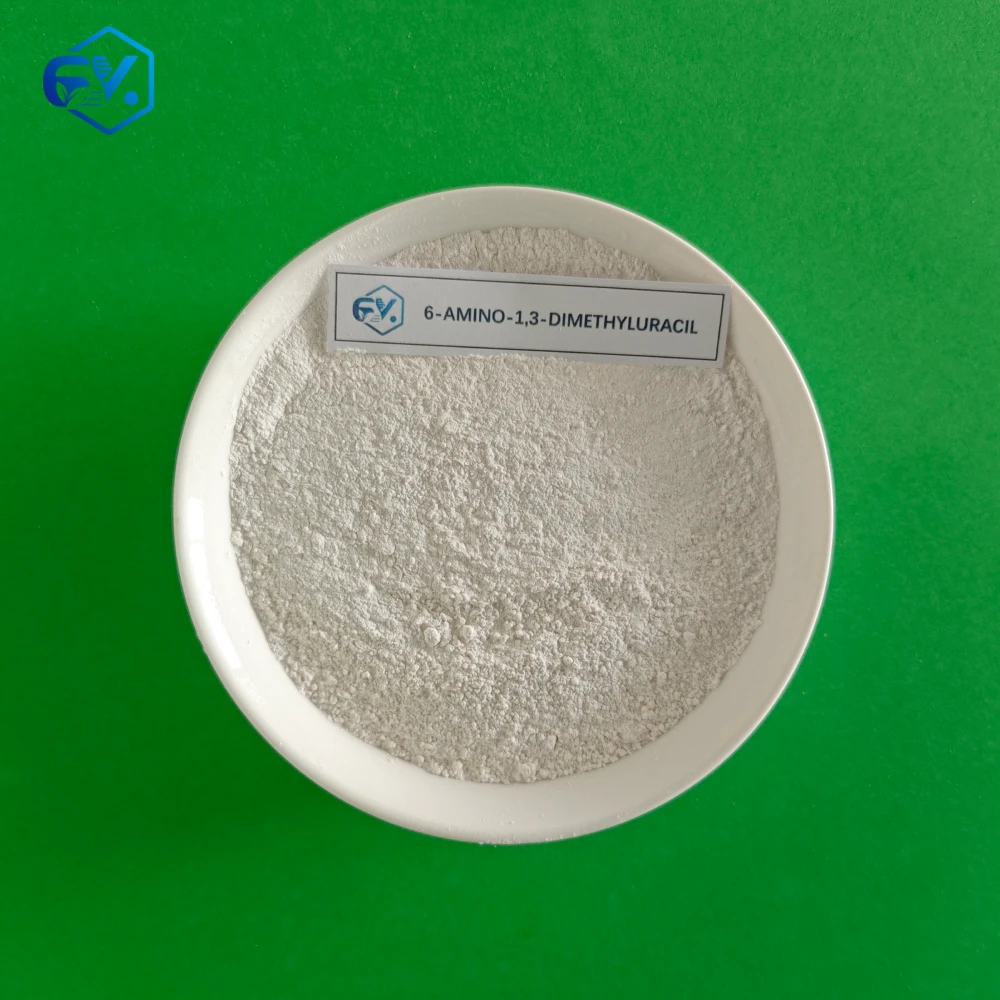
6-amino-1,3-dimethyluracil is usually used as PVC stabilizer
Product function principle:
The melting point of 6-amino-1,3-dimethyluracil (DMAU for short) is as high as over 290°C, and the weight loss when heated at 200°C is less than 1%. Its own characteristics can adapt to the PVC production process. DMAU can absorb HCl produced during the PVC production process and can also replace unstable chlorine atoms.
DMAU and ZnSt2:
When DMAU and ZnSt2 are used together, DMAU can react with ZnCl2 to form a metal complex, which deactivates ZnCl2, prevents "zinc burning", and greatly enhances the long-term stability of PVC samples; it contains DMAU/ZnSt2 composite stabilizer, regardless of Both initial whiteness and long-term stability are better than those containing CaSt2/ZnSt2 composite stabilizer. When DMAU and ZnSt2 are used together, it has a good system stabilization effect, which is better than the synergistic effect currently commonly used in industry.
DMAU and Hydrotalcite:
DMAU and hydrotalcite are used at the same time. In the calcium-zinc stabilizer formula, adding 3-4% DMAU and 8-10% hydrotalcite can better suppress the initial coloration of PVC, and the formula is more economical and reliable.
DMAU and β-diketone:
DMAU and β-diketone are both emerging organic stabilizers. When compared individually, DMAU is superior in inhibiting initial coloration and long-term thermal stability. In the actual production process, DMAU can completely replace β-diketone or be used together with β-diketone.
This is the last article
Exploring Cellulose Adsorbent Applications Benefits and Sustainable Solutions





 English
  Arabic
  Belarusian
  Bengali
  Bulgarian
  Finnish
  French
  German
  Hebrew
  Hindi
Hindi  Hungarian
  Indonesian
  Italian
  Japanese
  Korean
  Persian
  Portuguese
  Russian
  Spanish
  Turkish