







Securing a stable supply of high-purity chemical intermediates is often the invisible bottleneck in pharmaceutical and polymer production. For manufacturers working with PVC heat stabilizers or complex pharmaceutical synthesis, the difference between a 95% and 97% purity level can dictate the entire stability of the final batch.
The global shift toward "green chemistry" has placed unprecedented pressure on industrial chemical suppliers to provide eco-friendly alternatives that do not compromise on technical performance. This evolution is particularly evident in the production of uracil derivatives and textile auxiliaries, where regulatory compliance like EU REACH is no longer optional but a prerequisite for market entry.
This analysis examines the critical technical parameters of dimethylurea derivatives and the strategic frameworks manufacturers use to evaluate their chemical partners in a volatile global supply chain.


1,3-dimethylurea (sym-dimethylurea) serves as a foundational building block for several high-value chemical chains. Its primary value lies in its ability to act as an intermediate for the synthesis of theophylline and caffeine, as well as its critical role in producing formaldehyde-free anti-wrinkle agents for the textile industry.
Beyond textiles, the transition toward more sustainable polymer additives has increased the demand for uracil-based intermediates. Companies like Hebei Guangxing Chemical have specialized in this niche, integrating the production of 1,3-dimethylurea with 6-amino-1,3-dimethyluracil to create a streamlined supply chain for PVC heat stabilizers.
When assessing a chemical intermediate, purity is not the only metric that determines performance. For a product like the Raycare CR-ZFL series, chromatographic purity (typically $\ge$95.0% to 97.0%) must be balanced with moisture content. In high-precision synthesis, moisture levels $\le$1.0% are essential to prevent side reactions that can degrade the quality of pharmaceutical raw materials.
Physical properties also play a role in processing efficiency. A melting point range of 104~108°C for 1,3-dimethylurea ensures consistent behavior during thermal processing and crystallization. These tight tolerances are what distinguish professional industrial chemical suppliers from generic commodity traders.
Furthermore, the appearance—typically an off-white crystal—serves as an immediate indicator of the oxidation state and purity of the batch. For industrial users, receiving a consistent morphology in 25KG bags or customized packaging is vital for automating the feeding processes in large-scale reactors.
The regulatory landscape for specialty chemicals has become increasingly fragmented. For products exported to the European Union, EU REACH registration is the definitive benchmark for safety and environmental impact. Similarly, Turkey's KKDIK and the RoHS standards dictate the permissible levels of hazardous substances in electronics-grade plastics.
Regulatory certification is no longer just a legal hurdle; it is a technical validation of a supplier's manufacturing consistency and environmental stewardship.
Enterprises that hold ISO 9001:2015 (Quality), ISO 14001:2015 (Environmental), and ISO 45001:2018 (Occupational Health) certifications demonstrate a systemic approach to risk management. For a buyer, these certifications reduce the cost of auditing and provide a level of trust in the sustainability of the supply chain.
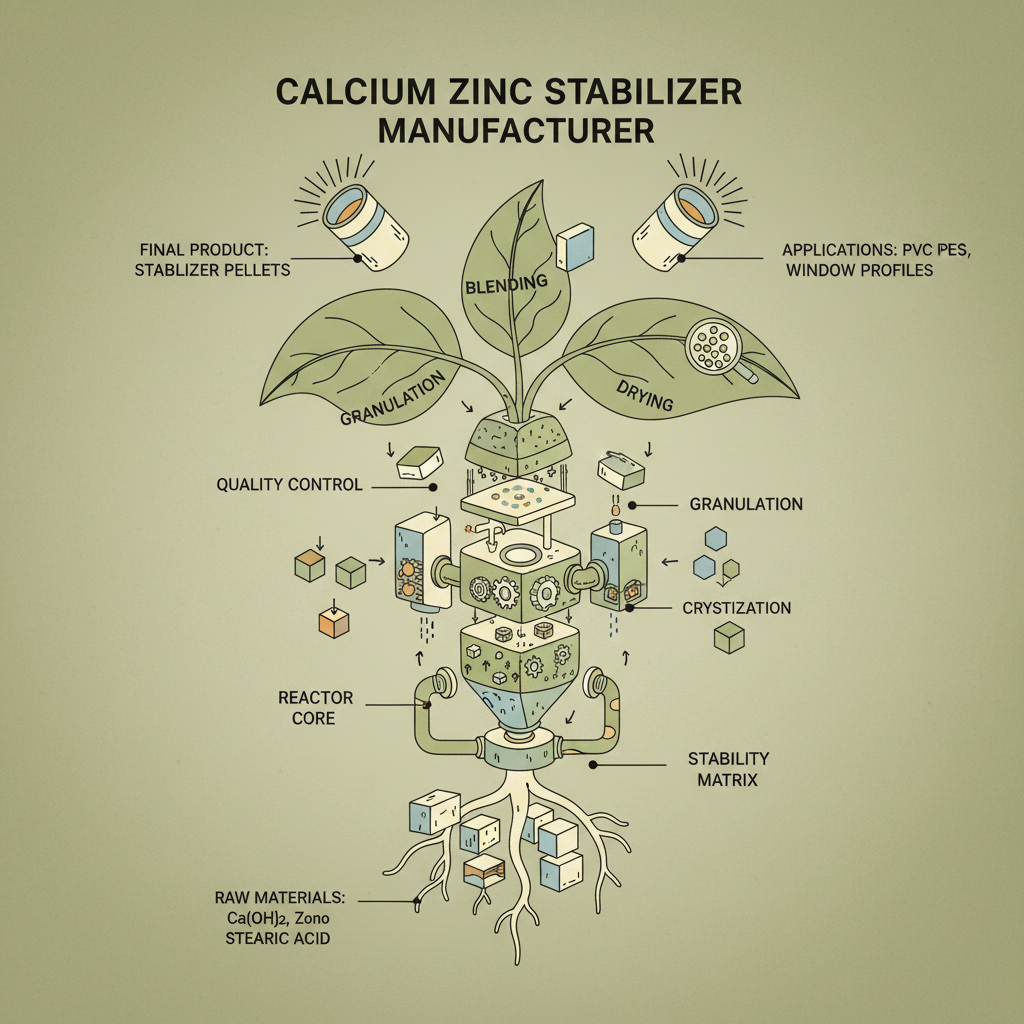
Calcium Zinc Stabilizers are rapidly replacing lead-based alternatives due to environmental mandates. The efficacy of these eco-friendly stabilizers depends heavily on the quality of the intermediates used in their formulation. High-purity uracil derivatives contribute to better thermal stability and initial color retention in PVC profiles.
To quantify the value provided by specialized intermediates, we can look at a relative performance index across different stabilizer types. The goal is to maximize thermal stability while minimizing the "zinc burning" effect common in low-grade stabilizers.
In the textile sector, the adoption of 1,3-dimethylurea as a fiber treatment agent allows manufacturers to create low-formaldehyde or formaldehyde-free anti-wrinkle finishes. This is critical for apparel brands targeting the EU and US markets, where strict limits on volatile organic compounds (VOCs) are enforced to protect consumer health.
In pharmaceutical manufacturing, the intermediate acts as a precursor for caffeine and theophylline synthesis. Here, the requirement for chromatographic purity $\ge$97.0% is non-negotiable, as any residual impurities can trigger failed quality control tests in the final active pharmaceutical ingredient (API).
The trajectory of the PVC additive market is moving toward "specialized, refined, and unique" formulations. This means moving away from generic stabilizers toward those tailored for specific applications, such as medical-grade tubing or high-durability construction profiles.
We are seeing a rise in the integration of R&D between chemical producers and academic institutions. This collaboration focuses on reducing the cost of uracil synthesis and improving the biodegradability of the final additives, ensuring that the products are not only efficient but also align with the circular economy.
The "Manufacturing Champion" model, as seen in leading Hebei-based chemical parks, emphasizes scale combined with precision. By producing 5,000 to 6,000 tons annually of key intermediates, suppliers can stabilize global pricing while maintaining the flexibility to provide customized specifications for multinational enterprises.
Selecting the right partner among numerous industrial chemical suppliers requires a multi-dimensional evaluation. Buyers must look beyond the unit price to consider the "Total Cost of Quality," which includes the cost of potential batch failures and regulatory non-compliance.
A robust evaluation framework considers the supplier's internal R&D capabilities, their history of certification renewals, and their ability to provide samples for verification. Suppliers that act as "Class A" providers for multinational firms typically have the most rigorous quality control systems.
The following table provides a conceptual framework for comparing different tiers of chemical suppliers based on operational and technical requirements.
| Evaluation Factor | Commodity Trader | Standard Manufacturer | Specialized Producer |
|---|---|---|---|
| Purity Control | Variable / Batch-based | Consistent (95%+) | Precision ($\ge$97%+) |
| Compliance | Basic ISO | ISO + RoHS | EU REACH / KKDIK |
| R&D Capability | None / Outsourced | Basic Process Opt. | Academic Collabs |
| Supply Stability | Market Dependent | Moderate | High (Integrated Chain) |
| Customization | Not Available | Limited | High Flexibility |
| Risk Profile | High (Quality Drift) | Moderate | Low (Certified) |
1,3-dimethylurea is a simpler intermediate primarily used as a precursor for other chemicals and as a textile auxiliary for anti-wrinkle finishes. In contrast, 6-amino-1,3-dimethyluracil is a more complex derivative that serves as a critical building block for pharmaceutical raw materials and specifically as a key component in the synthesis of eco-friendly PVC heat stabilizers. While the former is more versatile across industries, the latter is more specialized for high-end polymers and medicines.
Excessive moisture in intermediates like sym-dimethylurea can lead to hydrolysis or undesired side reactions during subsequent synthesis steps. This often results in lower final yields and the formation of impurities that are difficult to remove. Maintaining a moisture level of $\le$1.0% ensures that the chemical remains stable during storage and reacts predictably in a reactor, which is essential for achieving high chromatographic purity in the final product.
EU REACH (Registration, Evaluation, Authorisation and Restriction of Chemicals) is a mandatory regulation for any company exporting chemicals to the European Economic Area. It ensures that the substances produced do not pose an unacceptable risk to human health or the environment. For a supplier, having REACH registration proves that their product has undergone a rigorous safety assessment, allowing their customers to import and use the chemicals without facing legal penalties or customs delays.
Buyers should prioritize the integration of the supply chain. A supplier that produces its own intermediates (like uracil derivatives) typically offers better price stability and tighter quality control than a trader. Additionally, a "Class A" supplier status with other multinational firms is a strong indicator of operational reliability. Technical support—specifically the ability to provide customized specifications and sample batches for testing—is also a key differentiator.
Yes, modern Calcium Zinc stabilizers can match and often exceed the performance of traditional lead stabilizers, provided they are formulated with high-purity intermediates. While they may have different thermal profiles, the use of specialized uracil-based additives improves the initial color and long-term stability of the PVC. The shift is driven not just by law, but by the technical ability to achieve high-performance results without toxic heavy metals.
The standard industrial packaging is typically 25KG bags, which balance ease of manual handling with shipping efficiency. However, for large-scale automated plants, customized bulk packaging or moisture-proof lining is often required. Because the product is an off-white crystal sensitive to moisture, the integrity of the packaging is just as important as the purity of the chemical itself to prevent degradation during transit.
The stability of the global chemical supply chain depends on the transition from commodity-based trading to specialized, technical partnerships. As regulatory pressures mount and the demand for high-purity, eco-friendly intermediates grows, the value shifts toward manufacturers who can integrate R&D with large-scale, certified production.
For procurement managers and chemical engineers, the focus must remain on the intersection of purity, compliance, and supply chain integration. By prioritizing suppliers who hold international certifications and specialize in the uracil synthesis chain, manufacturers can ensure both the quality of their end products and the sustainability of their operations.