








Oct . 28, 2026
THE BUYER'S GUIDE / SELECTION
Light Calcium Carbonate is a white powder used as an industrial filler across a range of formulations—from plastics and rubber to coatings and paper. Selecting the right grade requires matching particle characteristics, formulation compatibility and process conditions to the end application. This guide covers the key criteria buyers and procurement teams should evaluate before specifying or ordering Light Calcium Carbonate, based on confirmed product information from HEBEI GUANGXING CHEMICAL INDUSTRY CO., LTD.
Grade and specification alignment: confirm particle size distribution, whiteness, surface treatment and all grade-specific parameters with the supplier before specifying; mismatched specifications are a primary source of filler performance failures.
Application and formulation compatibility: verify suitability through controlled formulation and process trials for the intended end-use (plastics, rubber, coatings or paper) before approving for production, as performance depends on both grade and the customer's process.
Light Calcium Carbonate (also referred to as precipitated calcium carbonate) is a white powdered material produced for industrial applications. It is widely evaluated as a filler in formulations across multiple industries. As a category, it is distinguished by its comparatively low bulk density relative to heavy (ground) calcium carbonate, which influences how it disperses and performs in different processing environments.
Because performance depends on both the supplied grade and the customer's own production process, buyers should treat grade selection and formulation trials as necessary steps before full-scale adoption.
Not all Light Calcium Carbonate is equivalent. The most important first step is confirming the specifications of the supplied grade—including particle size distribution, whiteness and any other parameters relevant to the intended application. Specifications should be obtained directly from the supplier for each specific grade under consideration.
Light Calcium Carbonate can be evaluated as a filler in applications such as plastics, coatings, rubber and paper, depending on grade and formulation requirements. However, suitability is not automatic—it must be verified through formulation and process trials specific to each application.
| Potential Application Area | Typical Evaluation Focus |
|---|---|
| Plastics | Dispersion, mechanical property balance, processing compatibility |
| Rubber | Reinforcement level, compound viscosity, cure behaviour |
| Coatings | Opacity, gloss, rheology, coating adhesion |
| Paper | Brightness, opacity, retention, runnability |
Important: The table above reflects evaluation areas commonly associated with calcium carbonate fillers in general industry practice. Customers should verify suitability through their own formulation and process trials before specifying a grade for production use.
Light Calcium Carbonate is sensitive to moisture. Packaging and storage conditions should be confirmed according to the supplied grade and specific order requirements. Key handling points include:
Storage compatibility with other raw materials in the facility should also be checked during procurement planning.
Supplier documentation provides a starting point, but the final determination of fitness for purpose rests with the customer. HEBEI GUANGXING CHEMICAL INDUSTRY CO., LTD. recommends testing Light Calcium Carbonate in the intended formulation before use. This is standard practice for any functional filler, and it protects both production quality and material investment.
A structured trial should include:
When evaluating Light Calcium Carbonate for procurement, use the following framework to structure the decision:
Step 1 — Define application requirements. Identify the end-use (plastics, rubber, coatings, paper or other) and list the performance parameters that the filler must contribute to or not impair.
Step 2 — Confirm supplier grade specifications. Request data sheets for each candidate grade. Compare particle size, whiteness and any surface treatment details against application requirements.
Step 3 — Assess storage and handling fit. Confirm packaging format, storage conditions and moisture-control requirements against facility capabilities.
Step 4 — Conduct formulation trials. Test the selected grade in a controlled, representative formulation. Measure performance against defined acceptance criteria before approving for production.
Step 5 — Establish ongoing quality verification. Define incoming inspection parameters (e.g., whiteness, particle size, moisture content) and confirm with the supplier how grade consistency is maintained across batches.
HEBEI GUANGXING CHEMICAL INDUSTRY CO., LTD. offers Light Calcium Carbonate as part of its industrial product range. The company recommends that buyers confirm specifications for the supplied grade and conduct appropriate formulation and process trials to verify suitability for their specific application before proceeding to full-scale use. For grade-specific data, packaging options and order requirements, contact the supplier directly.
THE PEOPLE

About the author
THE COMPANY
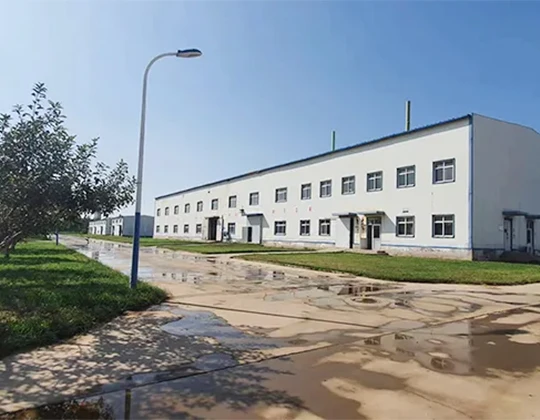
Hebei Guangxing Chemical Co., Ltd. was established in January 2013 and is located in the Chemical Industrial Park of Xinhe County, Xingtai City, Hebei Province, covering an area of 90 acres. The main products are 5000 tons/year of 13-dimethylurea and 6000 tons/year of 6-amino-13-dimethyluracil. Our company is the first and the largest uracil production enterprise and also the only domestic uracil production enterprise specializing in PVC heat stabilizers in China.…
About Us ↗Visit company website ↗YOUR NEXT STEP
Use case, specification, quantity and delivery window: make the next conversation specific.
Active Pharma Ingredient Sourcing Strategies.