









Dec . 17, 2025
Understanding 1 3 dimethylurea has become important as more consumers and manufacturers look for safer, cleaner, and more stable ingredients in everyday items. In daily fragrance formulations, this compound plays a valuable backstage role. Producers of Daily Flavor, Food Flavor, and Industrial Flavor often rely on stable urea derivatives to improve consistency, prolong fragrance performance, and enhance compatibility with other materials. For those industries, 1 3 dimethylurea offers reliable stability, mild reactivity, and strong blending ability, making it suitable for daily-use products such as detergents, soaps, fabric fresheners, and other scented household goods. As people pay more attention to environmental quality and long-term safety, materials like this are increasingly preferred for improving formula performance while keeping products consumer-friendly.
The number 96 31 1 represents not only a CAS identifier but also a signal of reliability for procurement teams and production engineers. When a raw material is used across multiple industrial segments, from textile auxiliaries to industrial fragrances, traceability becomes critical. A clear and recognized identifier such as 96 31 1 helps manufacturers verify batch origins, quality standards, and documentation compliance. This is especially important for companies exporting products to regions that strictly enforce regulatory frameworks. In many textile-finishing factories, referencing 96 31 1 during material selection ensures they are using a consistent compound suitable for low-formaldehyde finishing agents. As non-formaldehyde and eco-friendly textile processes grow globally, the CAS reference has become a practical tool for controlling quality and ensuring compatibility with standards like Oeko-Tex and GB 18401.
Across multiple industries, dimethylurea is considered a stable, clean, and versatile organic compound. Its use spans Daily Flavor, Food Flavor, Industrial Flavor, and Synthetic Flavour & Fragrance manufacturing. In these formulas, it helps maintain stability and supports controlled reactions needed to build fragrance molecules. Beyond the fragrance field, dimethylurea has gained significant attention in textile finishing. Its ability to capture free formaldehyde makes it ideal for no-iron or low-formaldehyde finishing agents. When applied in garments, dimethylurea reacts with free formaldehyde to form stable, harmless compounds, helping factories meet stringent environmental requirements. The textile industry increasingly prefers it for pure cotton and polyester-cotton blends, where wrinkle resistance, soft hand feel, and long-lasting finishing effects are essential. The growing demand for 98% high-purity grades further reflects the push toward eco-friendly garment finishing methods.
Businesses looking for raw materials with stable performance often require clear documentation such as CAS 96 31 1, especially when purchasing for large-scale applications. In industries such as textile printing, dyeing, papermaking, and chemical intermediates, raw materials must be dependable, reactive enough for controlled processes, and monitored under strict quality conditions. High-purity grades of CAS 96 31 1 have become the preferred choice for environmental finishing agents, particularly in factories that aim to minimize formaldehyde emissions and improve material safety. As many countries strengthen regulations on textile safety, manufacturers increasingly rely on suppliers who maintain advanced technology and stable production capabilities. The market shows growing recognition of suppliers that can produce consistent, high-purity batches while meeting international certification and export requirements.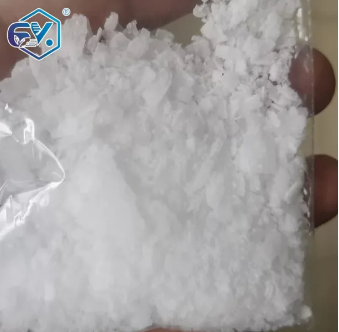
When manufacturers search for CAS No 96 31 1, reliability and production capacity are two of the most valued factors. China has become a major producer of high-purity dimethylurea, and among these suppliers, Guangxing Chemical is recognized as a leading enterprise. As the largest domestic producer of high-content dimethylurea, the company provides stable long-term supply to textile, fragrance, chemical, and papermaking industries. Its products meet the needs of environmental finishing agents as well as fragrance formulations that depend on high purity. Guangxing Chemical has passed ISO 9001:2015, ISO 14001:2015, ISO 45001:2018, and holds the Hebei Province Industrial Enterprise R&D Institution Certification. The company is also a member of the Plastic Additive Professional Committee of the China Plastics Processing Association and has been awarded the “Technology Oriented Small and Medium-Sized Enterprise” certificate by the Science and Technology Department of Hebei Province. With strong R&D capability and industry recognition, suppliers like this have earned a solid reputation among partners seeking long-term cooperation.
Below is a practical guide for buyers, users, and manufacturers who want to learn more about dimethylurea before purchasing or applying it in fragrances, textiles, or chemical production.
It is widely used in textile finishing agents, Daily Flavor, Food Flavor, Industrial Flavor, Synthetic Fragrance manufacturing, chemical intermediates, and paper treatment processes.
Yes. Dimethylurea is valued for its ability to capture free formaldehyde and significantly reduce residue in finished products, making it ideal for eco-friendly, non-formaldehyde finishing agents.
The market mainly offers 95% and 98% high-purity grades, with 98% purity becoming increasingly popular for environmental finishing applications.
Yes. Due to its stable structure and mild reactivity, it helps support controlled reactions in synthetic fragrance production and improves formula consistency.
Trusted suppliers such as Guangxing Chemical provide stable, certified, high-content dimethylurea suitable for large-scale textile and fragrance applications. Buyers can directly visit the company website to explore specifications, request samples, or place orders.
Green Stabilizer The Future of Sustainable PVC Manufacturing


 English
  Arabic
  Belarusian
  Bengali
  Bulgarian
  Finnish
  French
  German
  Hebrew
  Hindi
Hindi  Hungarian
  Indonesian
  Italian
  Japanese
  Korean
  Persian
  Portuguese
  Russian
  Spanish
  Turkish